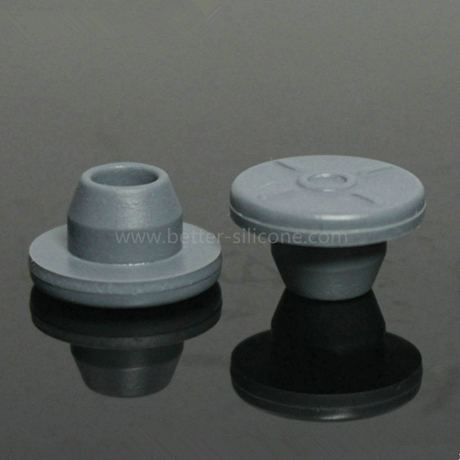
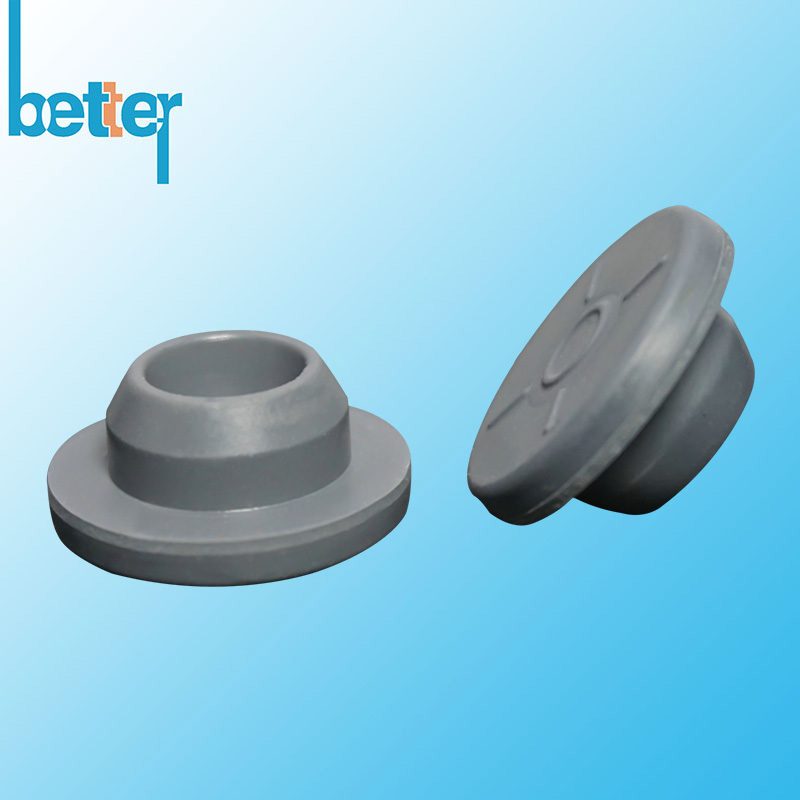
Chlorinated butyl rubber and brominated butyl rubber stopper
2017-03-13 · Hardy Ho
At present, there are two common halogenated butyl rubbers used for manufacturing Pharmaceutical Stoppers, including chlorobutyl rubber and bromobutyl rubber. Many Europeans and Americans usually manufacture Pharmaceutical Stoppers by bromobutyl rubber. However, In Asia, chlorobutyl rubber is main material of Pharmaceutical Stoppers in earlier period. Until now, 90% Pharmaceutical Stoppers are made of chlorobutyl rubber in Japan and Taiwan.
Comparisons of chlorobutyl rubber and bromobutyl rubber
1. Chlorobutyl rubber and Bromobutyl rubber belong to butyl rubber derivatives by reacting butyl rubber, also known as halogenated butyl rubbers, which helps butyl rubbers to improve processing performance and expand a wider range of application.
2. Stabilizer Content
Bromobutyl rubber contains active Bromine element, which result in lower storage stability and easy self-vulcanization. Therefore, Bromobutyl rubber usually need to be added stabilizer. However, chlorine element’s inertness in butyl rubber is stronger than Bromine element’s, so chlorobutyl rubber has a higher storage stability and then there’s usually no need to add stabilizer to butyl rubber, which makes inner contents higher purify.
3. Antioxidant Content: Both of Chlorobutyl rubber and Bromobutyl rubber share the same proportion.
4、Property:As industrial products, there is no essential difference in properties.
5、Machinability:Bromobutyl rubber has high cure reactivity and it has a wide range of available curing systems. Common curing systems all are available for Bromobutyl rubber and the cure rate is faster.
Industrial products have a high requirement for physical properties, which usually adopt Brominated phenolic resin, stearic acid, zinc oxide, thiazole and thiuram accelerator as curing systems. In early period, Pharmaceutical Stoppers also adopted the these systems, but with a period of application, researchers found that these systems have certain influence on compatibility between medical Stoppers and Pharmaceutical. At present, domestic Bromobutyl rubber usually choose sulphur for curing for high efficiency and low cost.
However, Bromobutyl rubber has relatively low reactivity, which cause limitation of choosing curing systems. Besides, it still has strict requirement for manufacturing technique (relatively difficult). In the early days, phenolic resin, stearic acid and zinc oxide are usually used as curing system, contributing to good heat resistance. However, product’s extraction liquid is color-developing, which will affect Pharmaceutical clarity. Now, these curing systems are not used any more.
Comparisons of chlorobutyl rubber stopper and bromobutyl rubber stopper
Bromobutyl Rubber Stoppers generally adopt sulfur curing systems, so heat resistance is worse slightly. Due to bromine element is relatively active, stoppers throw off a terrible smell during high temperature sterilization. Besides, during Sulfur vulcanization, accelerating vulcanizing agents are added to bromobutyl Rubber Stoppers, which has a so much influence on stopper’s Hemolysis experiment.
Chlorobutyl rubber stopper usually adopt non-free sulfur curing system, so heat resistance is good. Stoppers throw off less smell during high temperature sterilization. Because Chlorobutyl rubber don’t contain epoxidized soybean oil, direct contact between stopper and Pharmaceutical is less likely to produce the phenomena, such as opalescence.
Advantages of halogenated butyl rubber
1. Compared with common butyl rubber, halogenated butyl rubber increases greatly curing reactivity. Besides having the same properties as butyl rubber, halogenated butyl rubber equip other properties in curing, such as Cure versatility, curing without sulfur (accelerant containing sulfur) or zinc oxide, little vulcanizing agent or zinc oxide, faster cure rate, etc.
2. Halogenated butyl rubber improves butyl rubber’s Cure compatibility.
Advantages of Bromobutyl rubber
Bromobutyl rubber’s curing location is more flexible, resulting in greater cure activity and better Cure compatibility.
Bromobutyl rubber features:
(1) Various available curing agents. Besides curing systems available for chlorobutyl rubber, Bromobutyl rubber also have other curing systems, like polyamine curing, which can avoid existence of sulfur, accelerant containing sulfur, and zinc oxide, ensuring higher purify.
(2) High curing activity, fast cure rate, short curing time and small amount of vulcanizing agent.
(3) High Cure compatibility with high unsaturated rubber
(4) Formulation composition has small influence on curing(like, less affected by acid, slkali and humidity). Therefore Bromobutyl rubber is more suitable for curing injection in production process.
Compared with chlorobutyl rubber stoppers, Bromobutyl rubber stoppers have Better stability, longer life span and less impact on Pharmaceutical (especially low-molecular-weight Thrombin inhibitors)
Advantages of chlorobutyl rubber
Chlorobutyl rubber have better heat resistance, don’t tend to produce adhesion during high temperature sterilization and have higher efficiency during production.