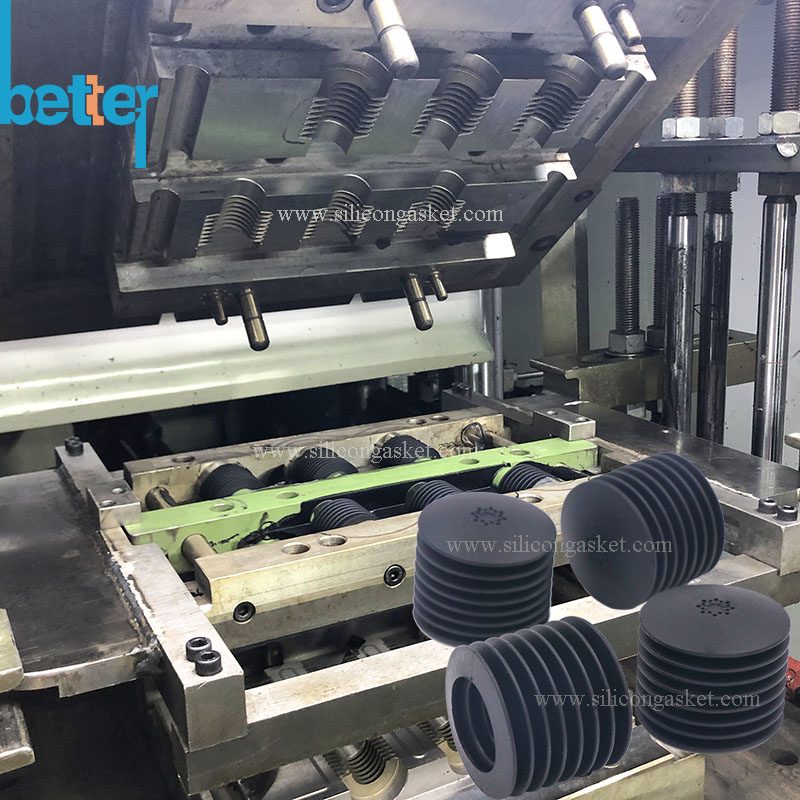
Compression Moulding for Liquid Silicone Bellows Vacuum Suction Gripster
Custom moulded by Xiamen Better Silicone Rubber Co., Ltd. Made to your drawing, 3D model or sample.
| Process | Compression, transfer or LSR injection moulding, chosen for your volume |
|---|---|
| Materials | Silicone, LSR, EPDM, NBR, neoprene, natural rubber, butyl, FKM |
| Hardness | 10 to 80 Shore A |
| Colour | Matched to Pantone or to your sample |
| Customisation | Size, geometry, branding, printing and packaging |
- Category
- Silicone Rubber Compression Molding
- Lead time
- Quoted with the part
- Tooling
- Designed and cut in house
Also searched as:Bellow Compression MoldingVacuum Suction MoldingBellow Suction Gripster Molding
Product description
Silicone Compression Molding for Rubber Bellows
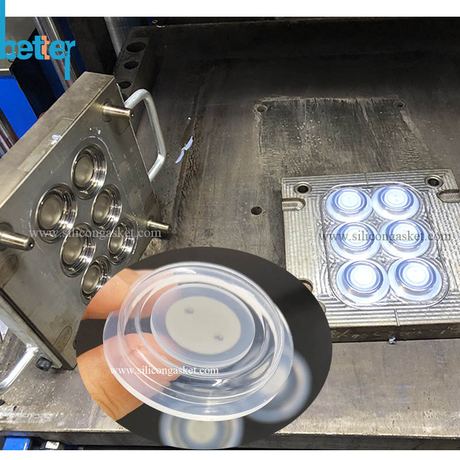
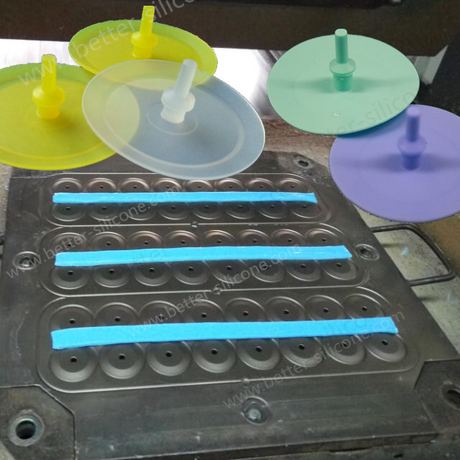
Silicone Compression Moulding is the process of placing a given amount of uncured solid silicone rubber material into a mold cavity, which is then closed and heated. When the parts have cured, they are removed from the mold. Silicone Compression moulding has been used to mold silicone rubber parts since the beginning of the rubber manufacturing industry. It is one of the oldest methods still used to mold silicone rubber parts.
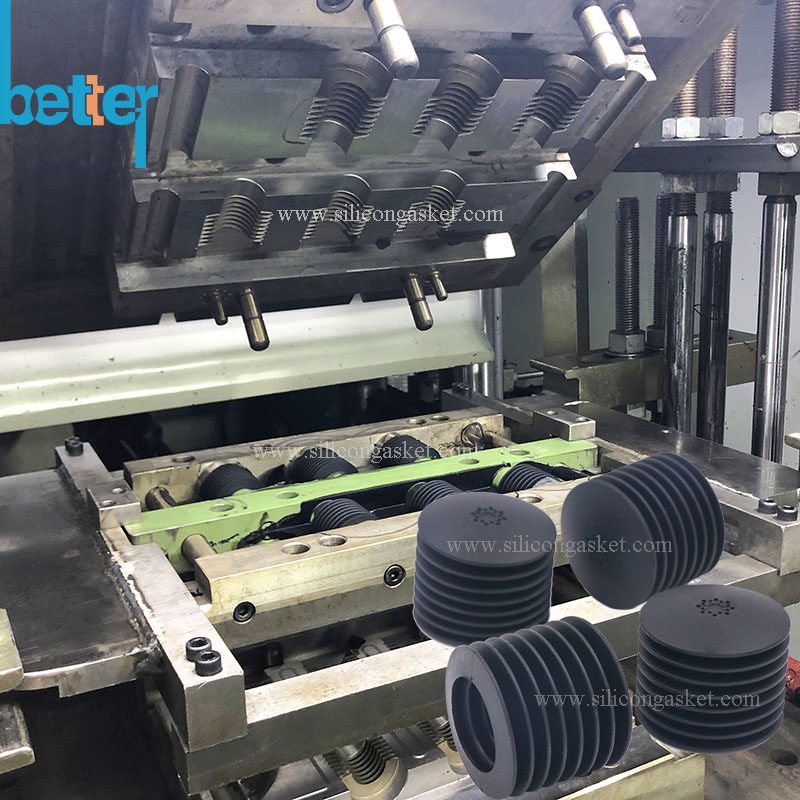
Silicone Compression Moulding for Bellows Pros
Silicone Compression molding for bellows is cost economic, and the compression molding process of bellows is quite simple when compared to LSR injection molding.
With the development of economy, we can minimum the tolerance at 0.02-0.1mm by using good steel material, good located pins, and good mold-making equipment.
Compression Moulding Materials are variours: Compression molding is suitable for many kinds of silicone rubber materials, as parts can remain pliable after the curing process. The most common materials include silicone bellows, natural rubber bellows, and EPDM bellows, NBR bellows.
Allowing materials and colors to be changed quickly due to the short set-up time.
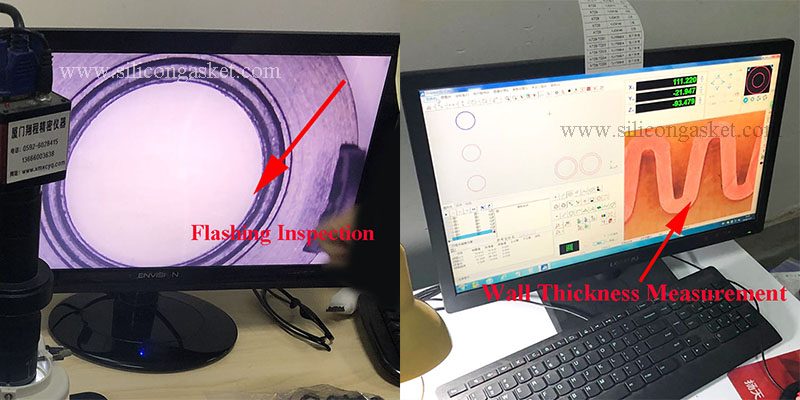
Silicone Compression Molding for Bellows Cons
Because of the mold structure & compression molding way, it is hard to achieve non-flash effect by located pins & mold-making equipment.
Material Wasted due to the flash
Hard to achieve automation unless the product structure is quite simple & production volume is large. When flash (the extra resin that escapes between two parts) occurs, it must be manually trimmed, thus slowing down production efficiency. Additionally, we can re-use the excess material, which creates more waste.
Higher Human Capital Investments: As previously mentioned, flash is removed manually on compression molds, which generates higher labor costs. It is hard to achieve automation unless the product structure is quite simple & production volume is large.
Slower Cycle Time: The time needed to start and repeat the sequence of operations is between 1-6 minutes for compression molds; a much slower cycle time than injection molding.
Lower Productivity: When flash (the resin that escapes between two parts) occurs, it must be manually trimmed, thus slowing down productivity. Additionally, you’re unable to regrind this excess material, which creates more waste.
Silicone Compression Molding Structure
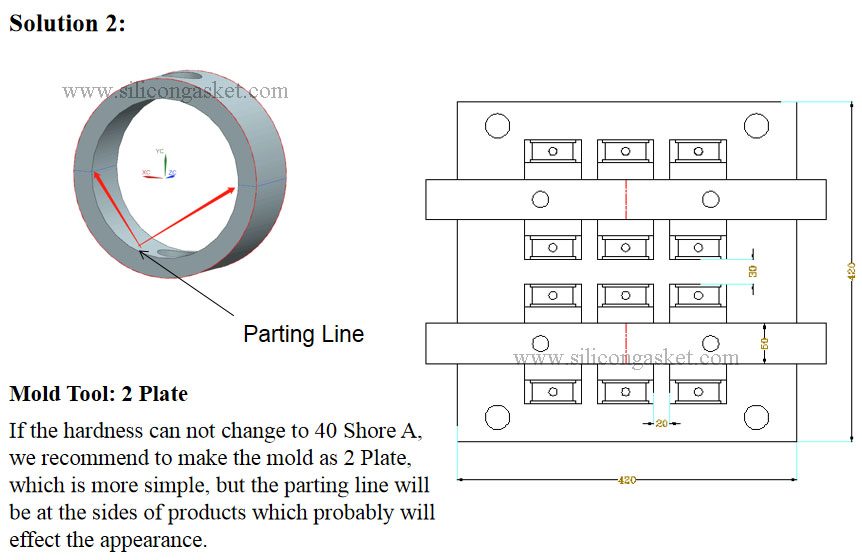
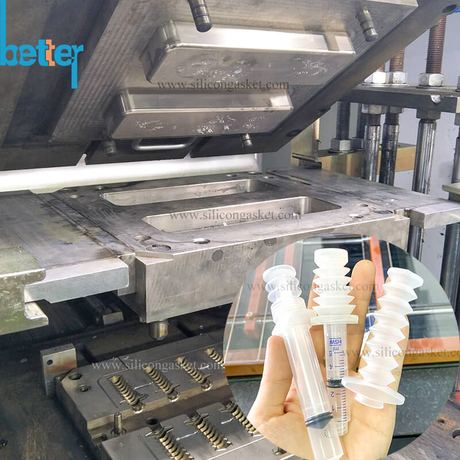
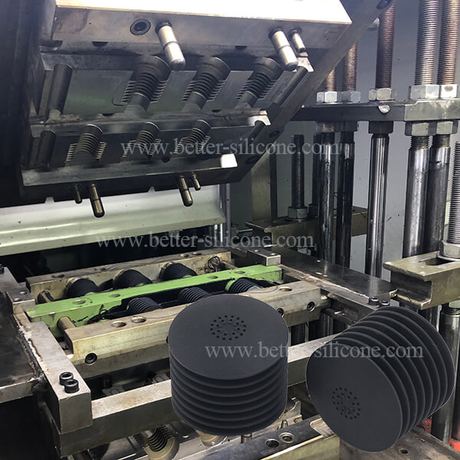
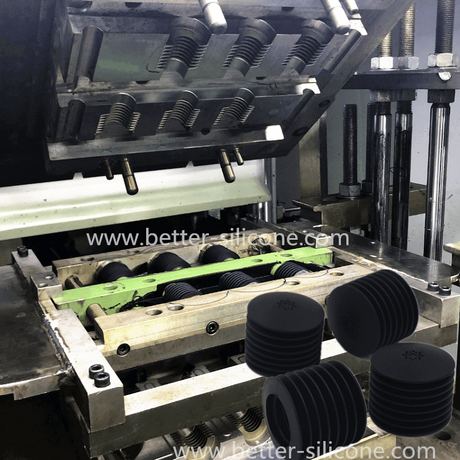
Two Plate Mold tool: for Simple part designs typically only require a two plate mold, which includes a cavity side and a core side. After the material is loaded, the mold plates are assembled and inserted into a compression molding press between the two platens. Next the press is clamped to a set pressure to produce high quality parts. Heat and pressure are applied for a given amount of time allowing the silicone to spread throughout the mold cavity and cure. Then pressure is released from the press, which then opens the mold when the molding process is OK, then remove the silicone parts by hand. This completes a normal compression molding cycle for a simple silicone part design.
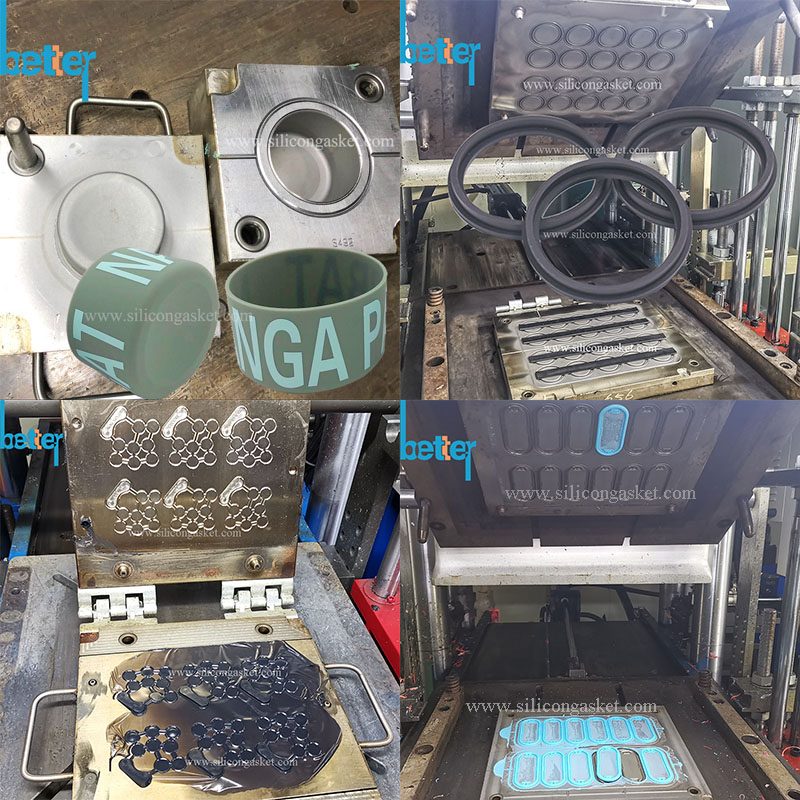
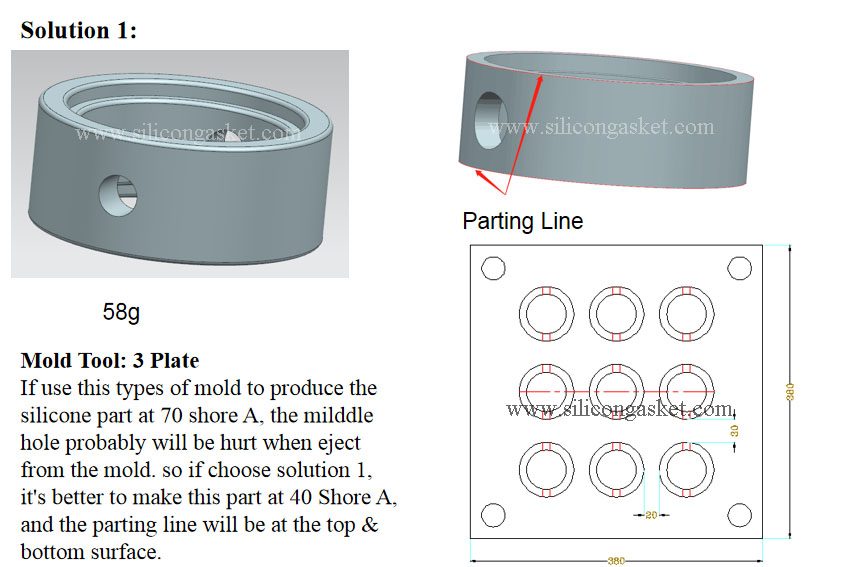
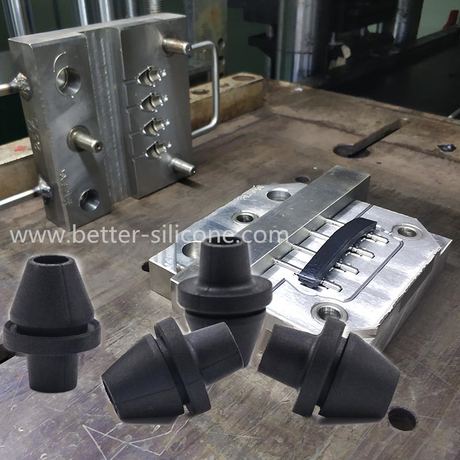
Three Plate Mold Tool: For part designs with hole or undercuts, it will require to add a middle plate, like silicone grommet, rubber grommet, rubber bellows, etc. Two plate mold tools consist of one parting plane and mold splits in two halves. Whereas three plate mold consist of two parting planes and mold splits in three sections as the followed picture shows. Being a tool of increased complexity, the three-plate mould is, therefore, more time-consuming and expensive to manufacture than its two-plate cousin.
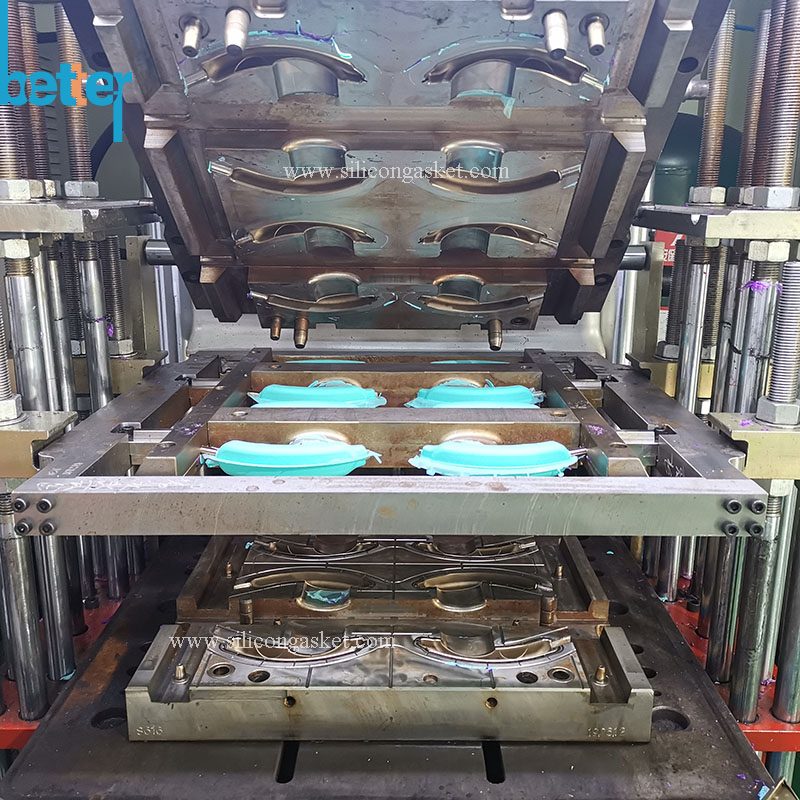
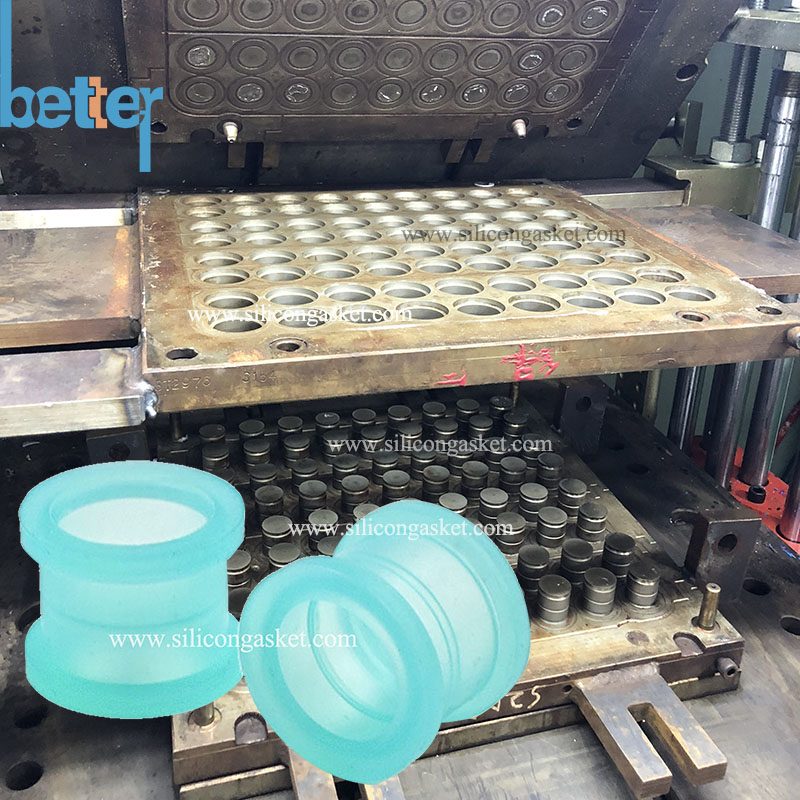
Mold Structure mainly depends on product design structure, parting line & hardness requirements,
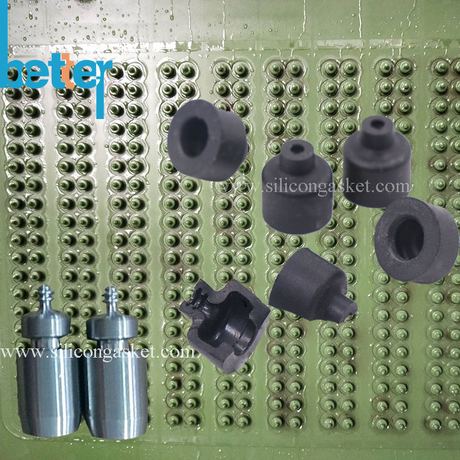
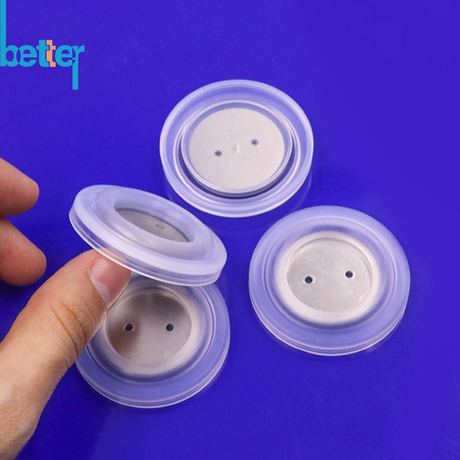
For Example, for the followed silicone parts with holes, there will be 2 options: