Electrically Conductive Silicone
Custom moulded by Xiamen Better Silicone Rubber Co., Ltd. Made to your drawing, 3D model or sample.
| Model | LD-12 |
|---|---|
| Brand | Better Silicone |
| Code | 4016999090 |
- Category
- Electrically Conductive Rubber
- Lead time
- Quoted with the part
- Tooling
- Designed and cut in house
Also searched as:electrically conductive siliconelectrically conductive silasticelectrically conductive elastomerelectrically conductive silica gelelectrically conductive rubber
Product description
Electrically Conductive Silicone
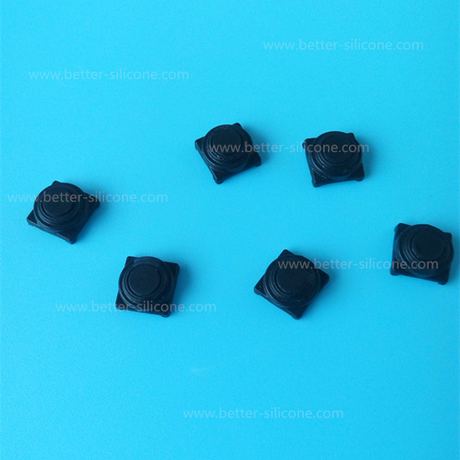
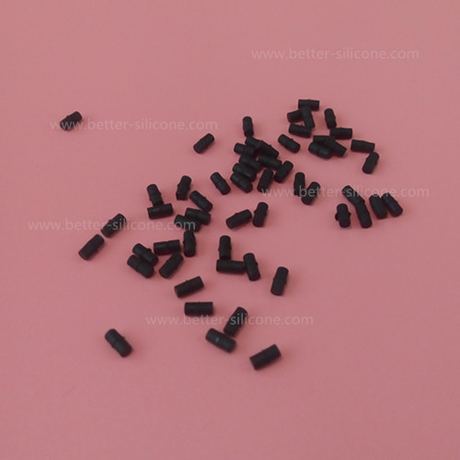
Electrically Conductive Silicone or Electrically Conductive Rubber is a generic term referring to any rubberized material with electrically conductive properties, such as glass silvering, silver-plat aluminum, silver, etc.These kind of conductive particle are well-dispersed in the silicone rubber. Electrically conductive network forms when the neighboring electrically conductive particles contact under pressure. It reduces or eliminates the EMI/RFI (electromagnetic interference and radio frequency interference) noise that is often associated with electronics.
Electrically Conductive Silicone Elastomer includes following several major types:
CONSIL-NC (graphite nickel plating filled in silicone rubber)
CONSIL-V (silver filling silicone rubber extrusion padding)
CONSIL-A silicone rubber (aluminum silver)
CONSIL-N (nickel plated silver filled in silicone rubber)
CONSIL-C silicone rubber (copper plating silver)
SC-CONSIL (graphite filled in silicone rubber)
CONSIL-R silicone rubber (fine silver)
CONSIL-II (silver filled in silicone rubber molded gasket)
Electrically Conductive Silicone Feature
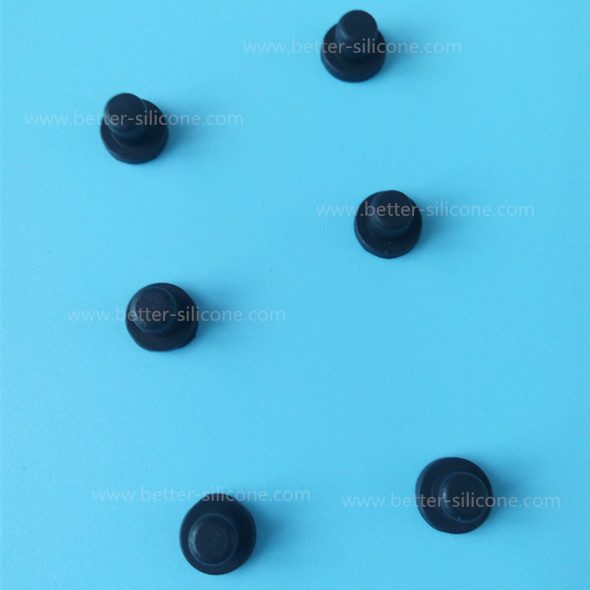
Electrically conductive silicone main function is to seal and electromagnetic shield.
Notes:
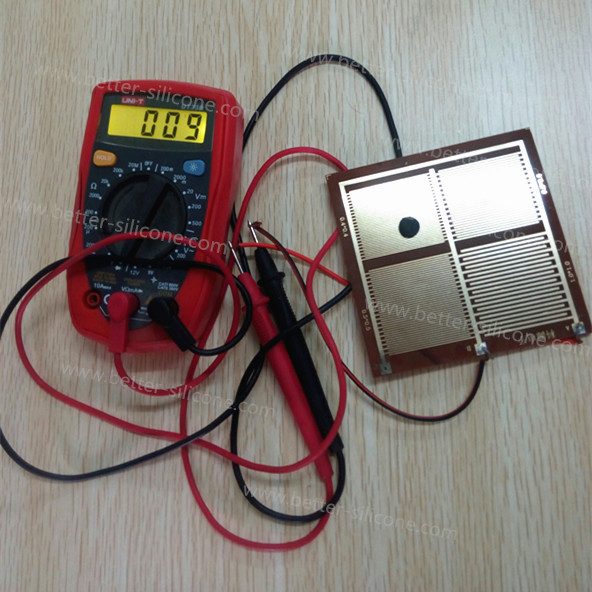
Electrically conductive silicone has electromagnetic shielding function, when the volume resistance is less than 10 ohm.cm. Mainly applied in electromagnetic shielding occasion, also used in the chassis, cabinets, shelter electronic and microwave waveguide system, connector pad, etc.
Electrically conductive silicone:The lower the resistance, the higher the hardness. When the resistance is below 10ohm.cm, the hardness is over 70 shore A.
Electrically Conductive Silicone Applications
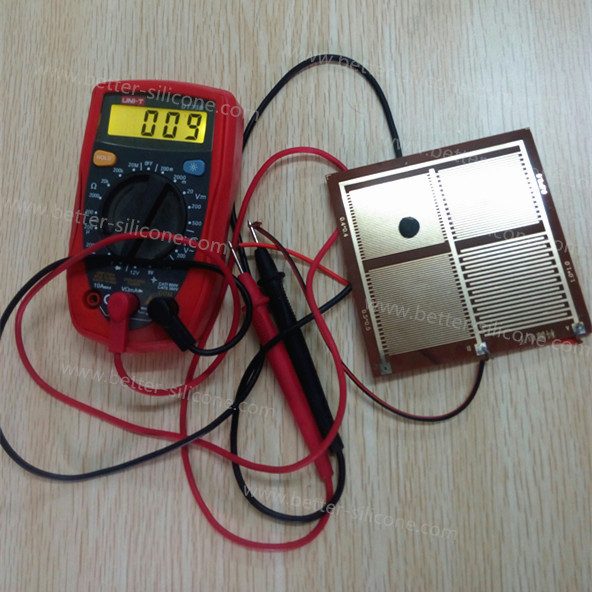
Electrically conductive silicone often refers to rubber material, whose volume resistance is within 10^9 ohm.cm. Conductive rubber can provide a good electrical conductivity (Inhibition of frequency 40 GHZ) with its good electromagnetic sealing and water vapor sealing ability. Its volume resistivity can be 0.004 ohm. cm, with good stability.
Electrically conductive silicone is used in both military and commerce. Main function is to seal and electromagnetic shield. Products can adopt compression molding or extrusion molding. It is on chip or other cutting shape. Shielding performance is as high as 120 dB (10 GHz). Electrically conductive silicone is also used in medical electrode. Volume resistance of conductive rubber is bigger compared with that of metal, based on volume resistance is proportional to the distance, the longer the distance, the greater the resistance. Electrically conductive silicone has been widely used on the medical electrode. Electrode is thinner, generally below 1 mm, conductive rubber is completely electrified in this case.
Electrically Conductive Silicone Main Principles
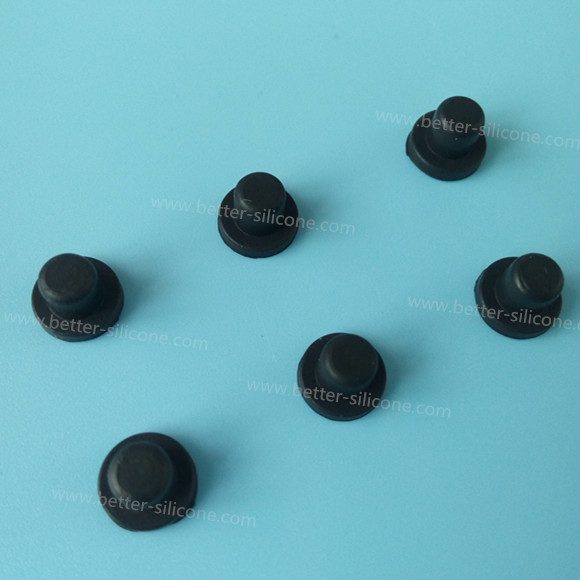
Electrically conductive particles filled inside the conductive silicone reach a certain volume number, and contact one another, finally form electron continuous state. When strong electromagnetic wave in external electromagnetic field hits free electrons in conductive particles, forming an opposite electromagnetic field, internal and external electromagnetic field offset each other to weaken the effect of electromagnetic interference wave.
Electrically conductive silicone another principle is energy transformation, in other word, law of conservation of energy. When electromagnetic wave hits free electrons, conductive particles generate heat in the process of electrons movement, which is electromagnetic interference wave - free electron movement kinetic energy-thermal energy, in order to weaken the electromagnetic interference.
Electrically Conductive Silicone Structure
Electrically conductive silicone must be subject to certain compression force to good electrical conductivity, Therefore, the structure must be designed to ensure proper pressure. Optimal amount of compression plates is in height from 7 to 15% ; solid round , D -shaped highly compressed optimum amount of 12 to 30% ; tubular , P-shaped highly compressed form optimum amount of 20 to 60%.
Electrically Conductive Silicone Structure
Electrically conductive silicone must be subject to certain compression force to good electrical conductivity, Therefore, the structure must be designed to ensure proper pressure. Optimal amount of compression plates is in height from 7 to 15% ; solid round , D -shaped highly compressed optimum amount of 12 to 30% ; tubular , P-shaped highly compressed form optimum amount of 20 to 60%.
Electrically Conductive Silicone Material Choice
When working with electrically conductive silicone , it’s important to remember that galvanic compatibility will also have an effect on which wire type or filler should be used. in this case, a conductive wire type or filler choice needs to be made where the difference in voltage potential between the dissimilar metals are as small as possible.
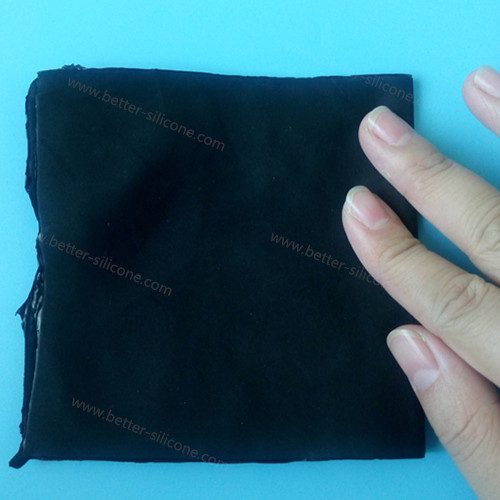
A widely popular form of conductive rubber is electrically conductive elastomer. Conductive elastomer can be die-cut to form a flat gasket but one of the large differences from other materials is that conductive elastomer can also be provided in a variety of different extruded profiles. These profiles can be extruded as a solid cross section or hollow depending on the compression required and height of the open aperture to be shielded. In conductive elastomer the base rubber is usually comprised of compounds such as silicone, fluorosilicone, or EPDM (ethylene propylene diene monomer). For example, silicone is used for general weather sealing and high temperatures to 400 deg. Fluorosilicone is used for applications where exposure to jet fuel, gasoline, and alcohols are present. EPDM is used for applications where exposure to coolants, steam, phosphate ester.
After choosing a specific rubber suited for the intended environment, a conductive filler must be determined. Some of the most common conductive metal fillers used are silver aluminum, silver glass, silver copper, and nickel graphite.Determining the right filler is dependent on the level of shielding needed for a specific application, the more conductive the filler the higher the level of shielding achieved.