Axolotl Light Manufacturing - How To Process Silicone Night Lamp Sweet Face?
2024-10-17 · Site Editor
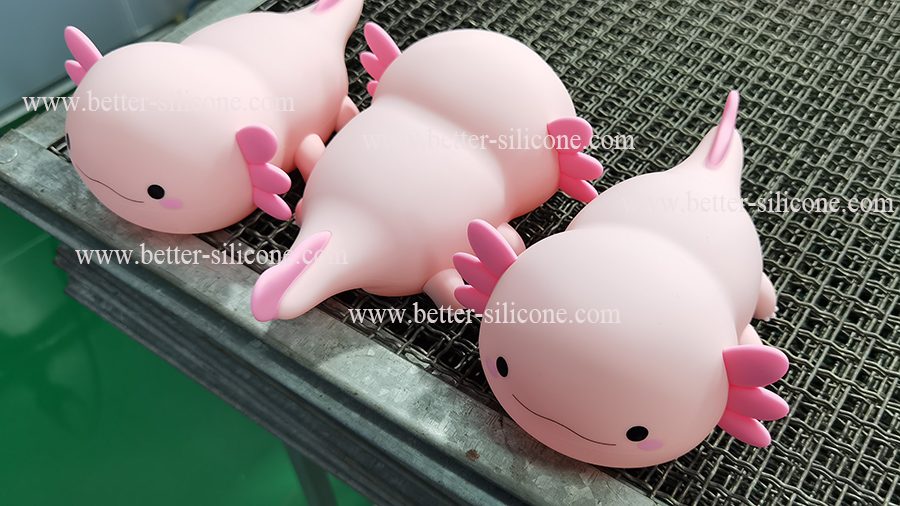
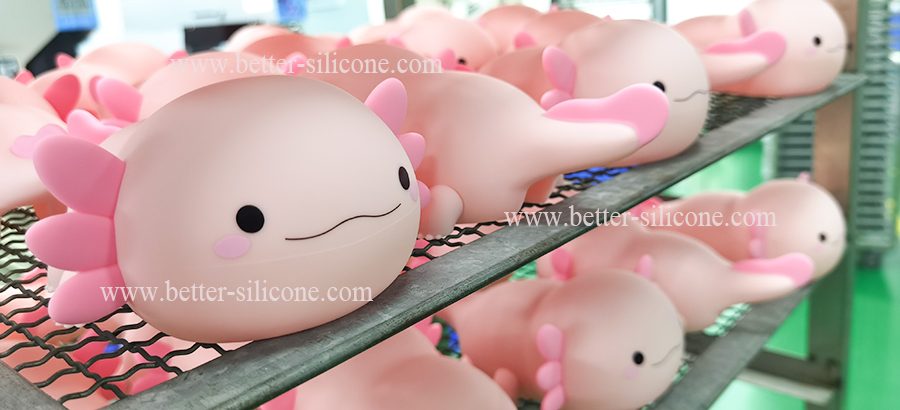
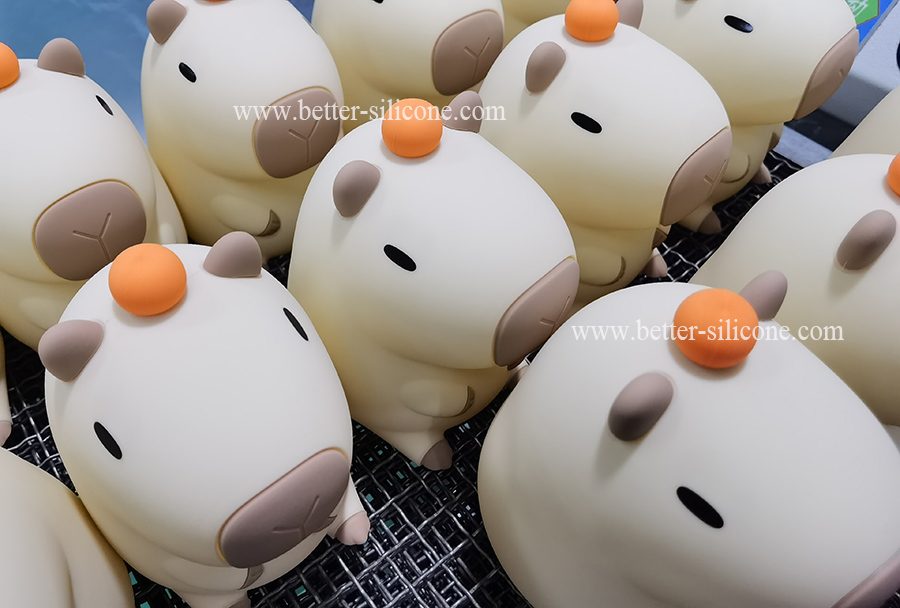
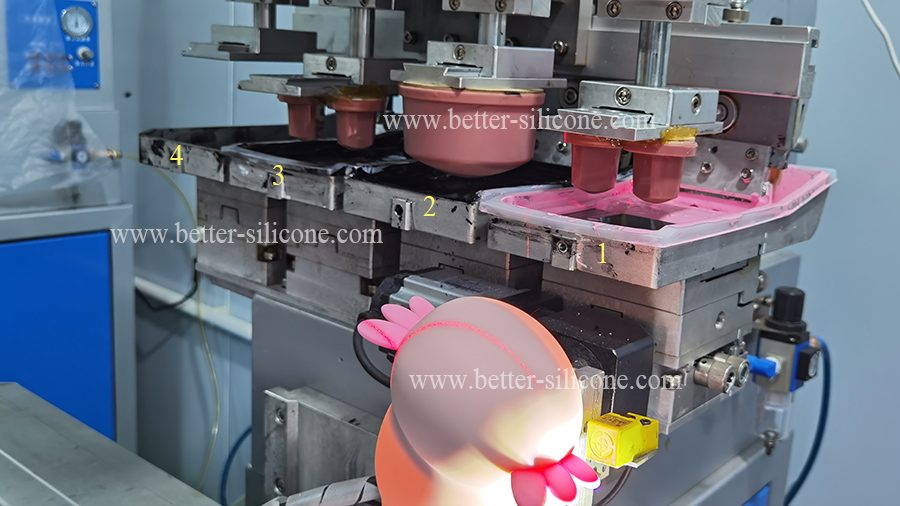
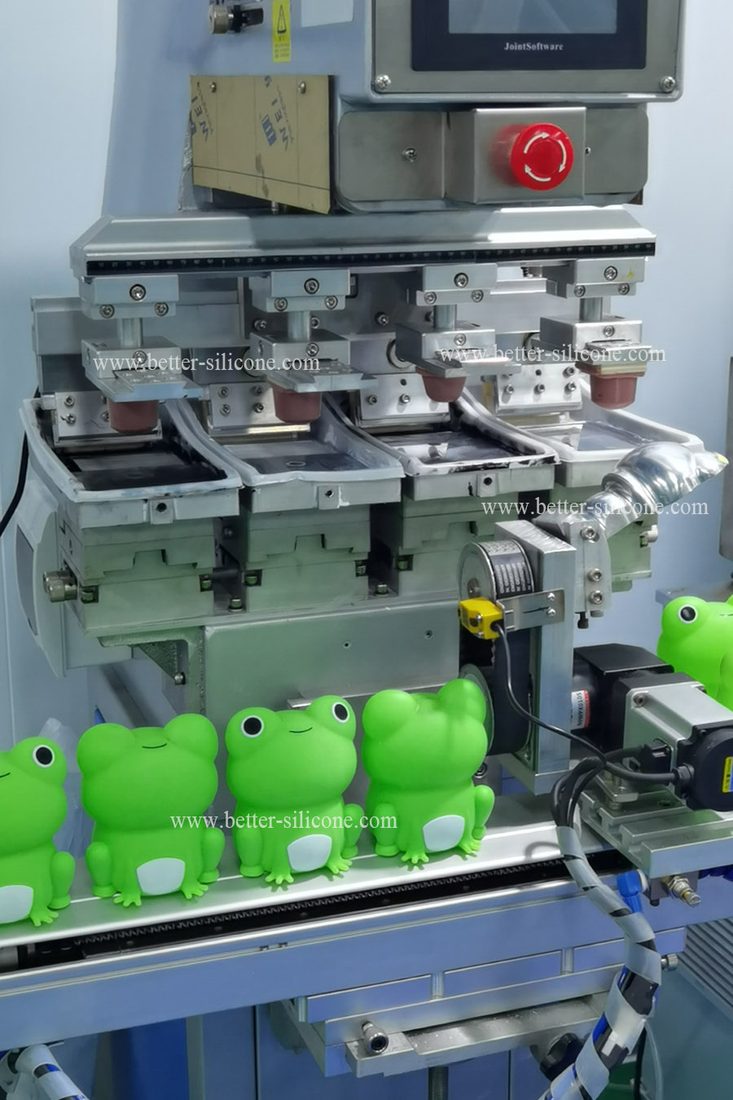
4 Color Pad Printing is a useful printing method for transferring patterns/icons from 2D (engraved on a plate that placed with required color ink) to surface of the curved product, such as many silicone lamps - axolotl lights, frog lamps, capybara night lights, corners protective covers, etc., the flexible printing head of the multiple colors pad printer picks up specific color from the ink cup/pot/plate to surface of the night light, so need to place the product on a solid location tool to avoid misprinting. If several colors or patterns need to be printed, the corresponding number of printing heads is selected and the pattern is engraved on the metal plate where the pigment is placed.
Pad Printing Compared With Silkscreen Printing
Pad printing is a technique used to transfer images onto various surfaces. It involves a silicone pad (printing head, generally is pink) picking up ink from a plate and then pressing it onto the item surface, which can be anything from toys to electronics, not only silicone lamps. This method is great for getting detailed designs on uneven or curved surfaces.
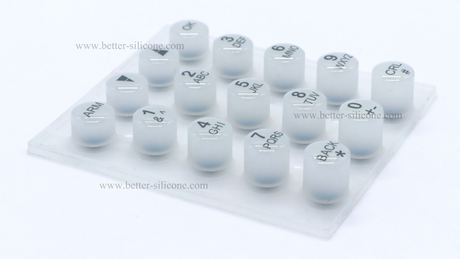
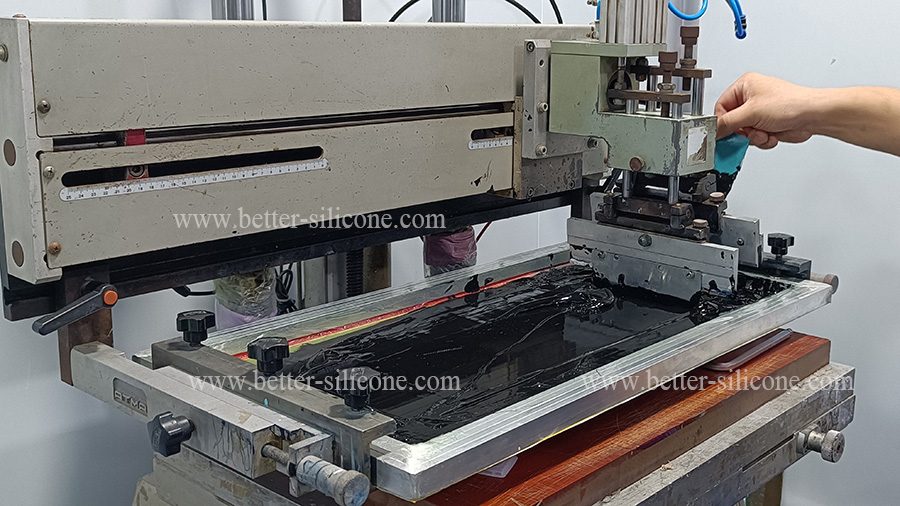
Silkscreen printing, also known as screen printing, is a method where ink is pushed through a mesh screen to create an image. First, a stencil of the design is made, and then ink is spread across the screen. The ink goes through the open areas of the stencil onto the material beneath, like keypads. It’s a popular choice for products with flat surface such as pads and larger designs.
Comparison:
Pad printing offers greater versatility for irregular surfaces and smaller runs, while silkscreen printing excels in vibrant colors, plane and large volumes. Pad printing can be more precise for detailed images, whereas silkscreen printing is often faster for larger designs.
How To Process Many Colors Pad Printing?
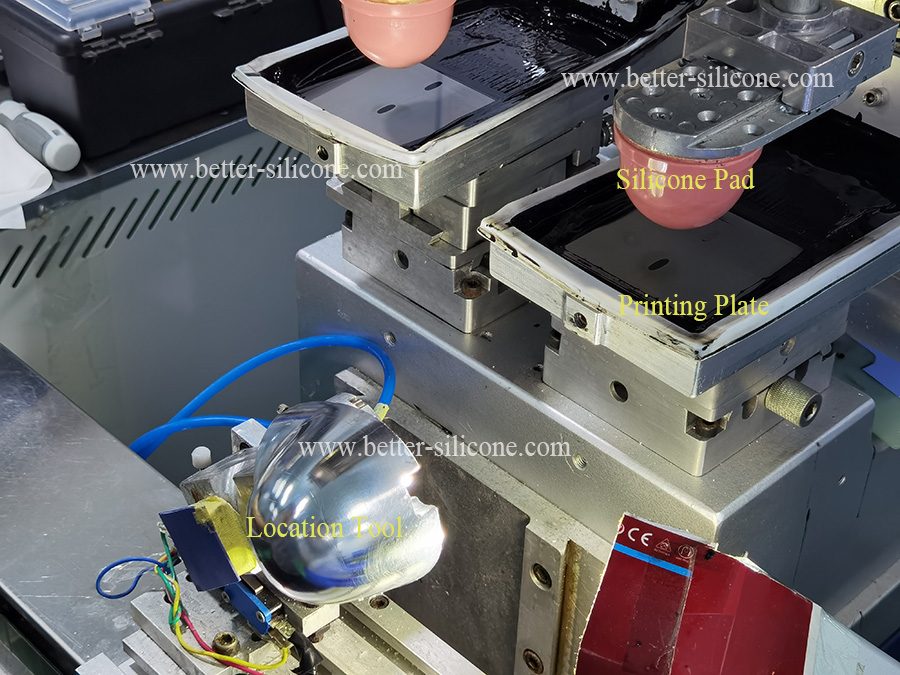
The pad printing head is the part that holds the silicone pad and transfers ink onto the item. It's designed for precise movement to ensure accurate placement. A location tool helps align the printed design correctly on the surface, ensuring consistency across multiple items. Together, they enhance the accuracy and quality of the printing process.
Processing The Ink Plate For Pad Printing Involves Several Steps:
The 4-Color Process
Step 1: Preparing the Pad
Step 2: Inking the Plate
Step 3: Transferring the Image
Step 4: Drying the Print
Create the Pattern/Artwork: Design the image you want to print, usually in a .DXF/.DWG/.Ai format.
Make the Printing Plate: The design is transferred onto a plate, typically made of metal (Metal Plates: Steel or aluminum for durability and high-quality prints). This can be done using laser engraving or chemical etching, which creates a recessed area for the ink.
Ink Application: Apply ink to the plate's surface. The excess ink is wiped away, leaving it only in the recessed areas.
Pad Transfer: A silicone pad presses down onto the plate, picking up the ink from the recessed areas.
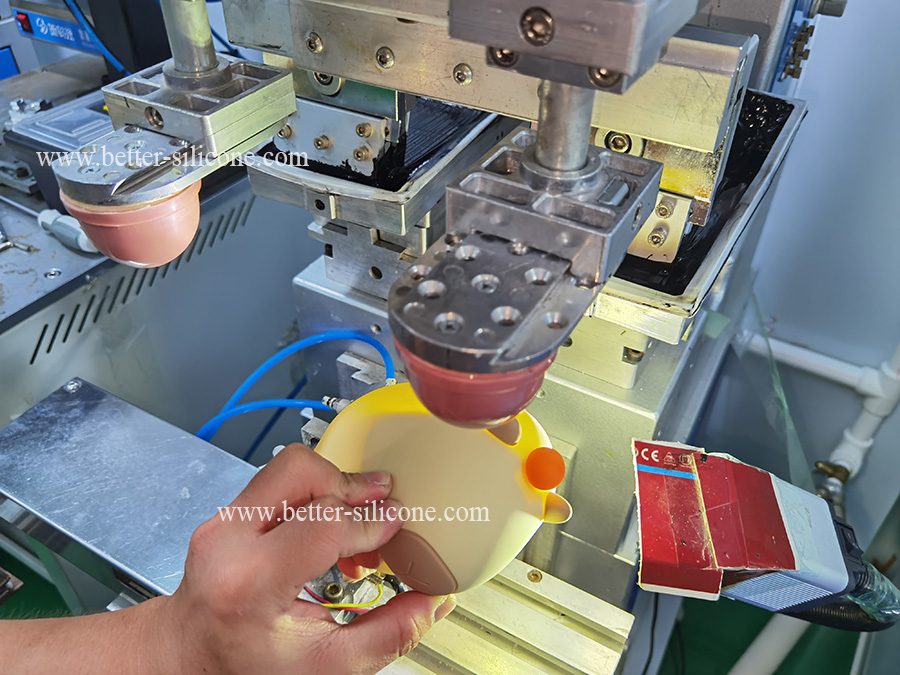
Printing: The pad then transfers the ink onto the item being printed, ensuring that the design is accurately placed.
Drying: Finally, allow the printed item to dry in an oven, depending on the type of ink used to determine drying time and temperature.
This process allows for high-quality prints on silicone lights surfaces.
Advantages Of 4 Color Pad Printing
Pad printing has several advantages:
Versatility: It can print on a wide range of surfaces, including uneven, curved, or textured items, making it suitable for various applications, such as axolotl light, duck light, bunny lamp, etc..
Detail and Precision: The silicone pad can transfer intricate designs with fine details and sharp lines, making it great for complex graphics.
Small to Medium Runs: It is cost-effective for small to medium production runs, as it requires less setup time compared to other printing methods.
Color Options: Pad printing can use a variety of inks, including specialty inks for different effects, allowing for vibrant colors and finishes.
Quick Changeovers: Changing designs between prints is relatively quick, which is beneficial for custom orders.
Durability: The prints are often resistant to wear and fading, making them suitable for items that see a lot of use, like promotional products.
Minimal Waste: The process generally generates less ink waste, making it a more environmentally friendly option.
Silicone Axolotl Light Quality Control
Check the color consistency and print accuracy.