The Chemical Properties of NBR Sealing Gasket
2018-02-07 · Cindy
NBR Sealing Gasket has good oil resistance and solvent resistance, the higher the acrylonitrile content of nitrile rubber, the better its oil and solvent resistance.
However, nitrile rubber seal has poor resistance to aromatic solvents, halogenated hydrocarbons, ketones and ester solvents. The aging resistance is better than natural rubber, but its ozone resistance is worse than that of natural rubber.
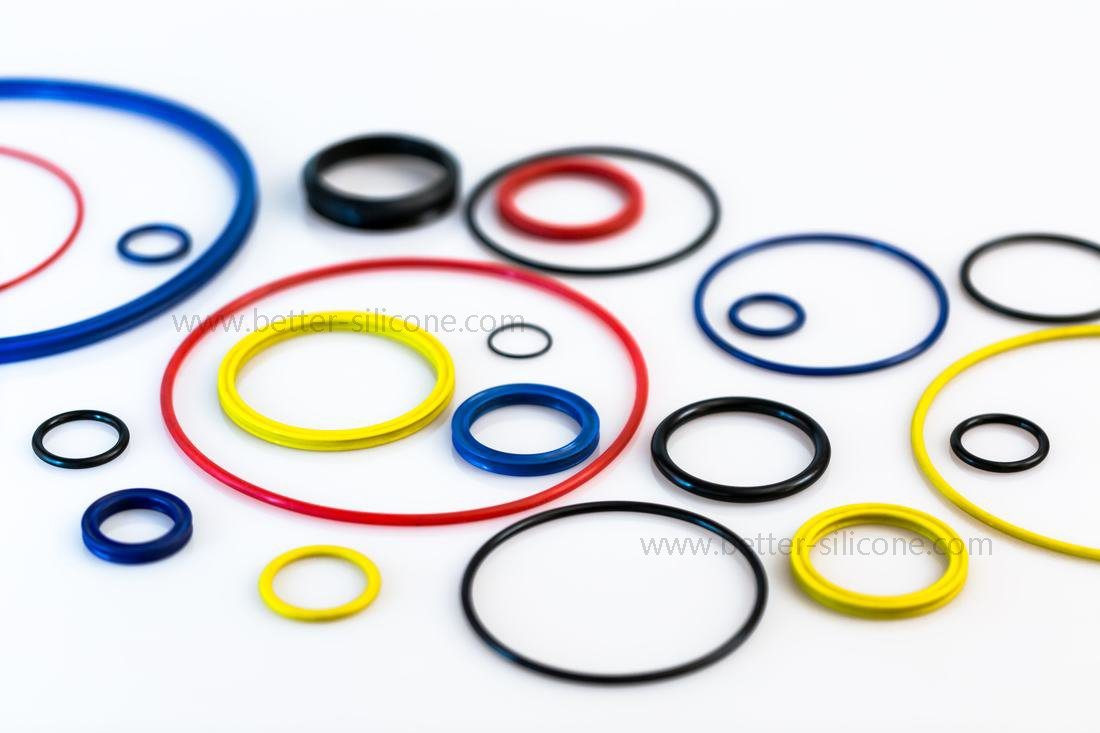
Oil resistance and solvent resistance
In common rubber, NBR gasket has the best oil resistance, which is associated with polarity, and polarity depends on the acrylonitrile content, the higher the acrylonitrile content, the better the oil resistance, the polarity of solvent affinity is also bigger (and its swelling volume is larger), the nonpolar solvent resistance is also better. Nitrile rubber seal on non-polar or low polarity solvents showed strong stability, especially resistant to gasoline and aliphatic oils, which is better than other rubber. In addition to NBR oil seal also have good stability for vegetable oils, fatty acids. The nitrile oil seal can be swelling when contact with aromatic solvents, halogenated hydrocarbons, ketones and esters and other polar solvents.
The resistance to petroleum-based oils, benzene and other non-polar solvents of NBR O-ring superior to natural rubber, styrene butadiene rubber, nitrile rubber and other non-polar rubber, but also better than neoprene. However, nitrile rubber gasket has very poor resistance to polar oils and polar solvents, which alcohol resistance is not good as no-polar rubber.
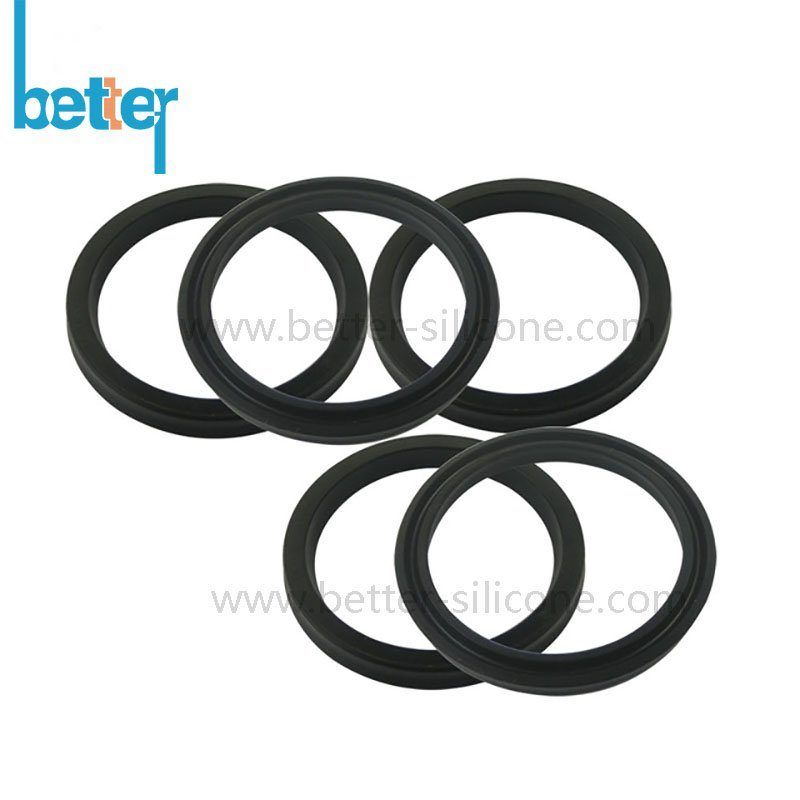
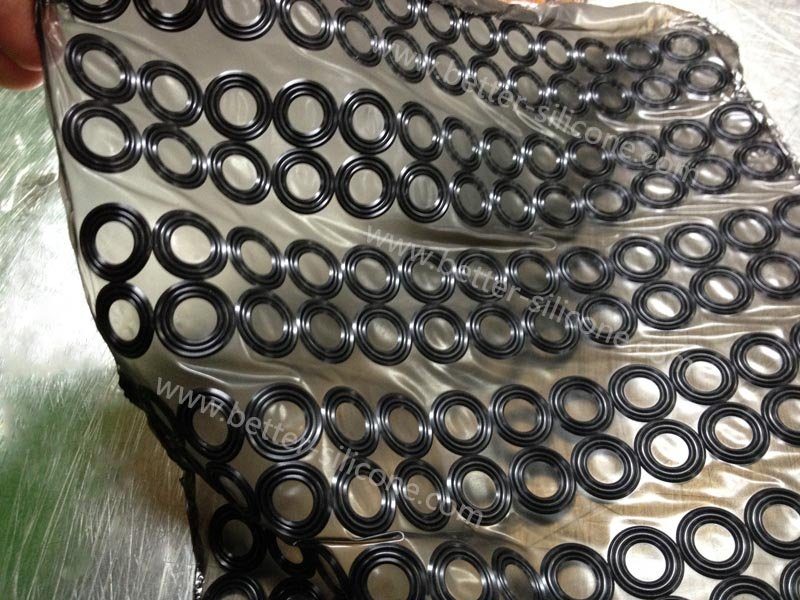
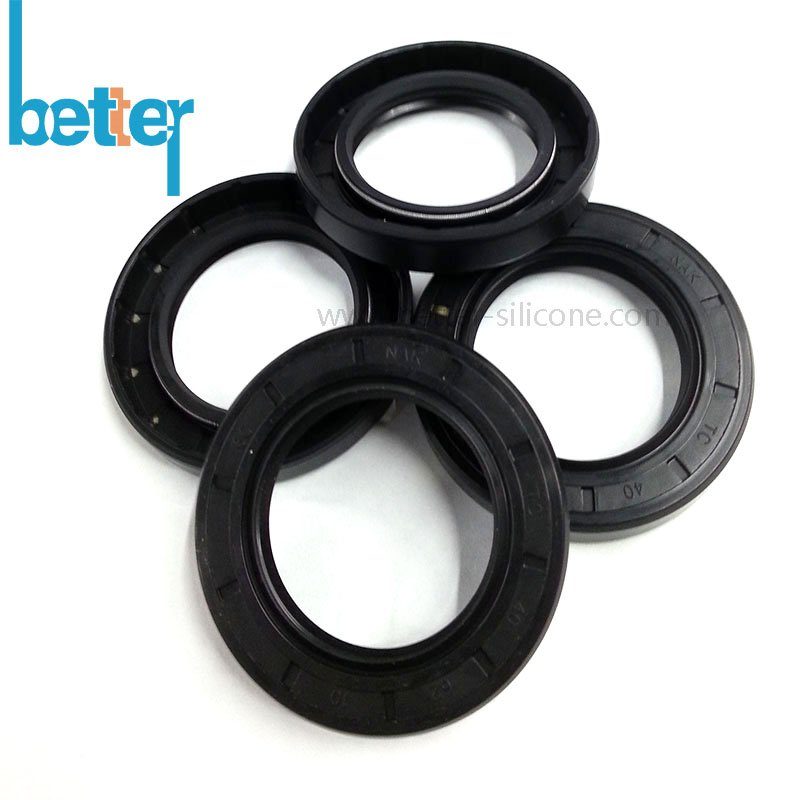
NBR O ring has good water resistance as high content of acrylonitrile, which has better compatibility with polar substances, such as PVC, phenolic resin, nylon.
The effect of nitrile rubber on inorganic acid, organic acid, alkali, salt and oxidant is more stable than that of natural rubber, for example, alkali solution or dilute acid on the nitrile rubber washer basically does not work. Nitrogen-containing ketones and aromatics with a high polarity have a swelling effect on nitrile rubber.
Various concentrations of nitric acid, concentrated sulfuric acid, hypochlorous acid and salts and hydrofluoric acid and ozone easily erode nitrile rubber ; Concentrated hydrochloric acid, formic acid and acetic acid are more likely to attack nitrile rubber; Hydrogen peroxide, chromic acid, phosphoric acid and sulfur dioxide and other weak oxidants, under certain conditions may erode nitrile rubber.
Table 11-1 shows the rate of volume change of NBR and other rubbers on different liquids such as oils and chemicals.
The effect of various chemicals on rubber is shown in Table 11-2.
Table 11-1 The rate of volume change of NBR and other rubbers on different liquids Unit: % | |||||||
Liquids | Temp. / ℃ | NBR | CR | NR | SBR | IIR | SI |
Gasoline | 50 | 10 | 55 | 250 | 140 | 240 | 260 |
Diesel oil | 50 | 12 | 70 | 250 | 150 | 250 | 150 |
Olive oil | 50 | -2 | 27 | 100 | 50 | 10 | 4 |
Lard oil | 50 | 1 | 30 | 110 | 50 | 10 | 4 |
Formaldehyde | 50 | 10 | 25 | 6 | 7 | 0.5 | 1 |
Acetaldehyde | 50 | 20 | 7 | 3 | -5 | 2 | 15 |
Ethylene glycol | 50 | 0.5 | 2 | 0.5 | 0.5 | -0.2 | 1 |
Diethyl ether | 50 | 30 | 95 | 170 | 135 | 90 | 270 |
Butanone | 50 | 250 | 150 | 85 | 80 | 15 | 150 |
Benzene | 50 | 200 | 300 | 350 | 350 | 150 | 240 |
Silicone oil | 50 | -1.2 | -1 | -2 | -2.5 | -0.5 | 30 |
Distilled water | 100 | 11 | 12 | 10 | 25 | 5 | 2 |
Brine | 50 | 3 | 5 | 2 | 7 | 0.5 | 0.5 |
Table 11-2 The effect of various chemicals on rubber | ||||
Chemicals | NR | IIR | CR | NBR |
Oxygen | B | A | A | A |
Ozone | D | B | B | D |
Chlorine (dry) | C | B | B | A |
Vapour | B | A | A | A |
Sodium peroxide (5%, 50℃) | C | A | B | B |
Sodium hypochlorite (5%, 50℃) | C | B | C | C |
Sulfur dioxide | B | A | B | B |
Hydrochloric acid (20%, 50℃) | A | A | A | A |
Boric acid | A | A | A | A |
Sulfuric acid (30%, 50℃) | A | A | A | A |
Nitric acid (10%, Room Temp.) | D | B | B | C |
Phosphoric acid (35%, Room Temp.) | B | A | B | B |
Hydrogen fluoride | D | B | C | C |
Chromic acid | C | B | B | B |
Ammonia | B | A | A | A |
Calcium hydroxide | A | A | A | A |
Sodium hydroxide (50%, 50℃) | A | A | A | A |
Sodium chloride (30%, 70℃) | A | A | A | A |
Note: A: Barely eroding B: Eroding Slightly and not affect using C: Great degree eroding D: Serious eroding and not available
Ageing resistance
The oxidation resistance of nitrile rubber is stronger than natural rubber, with poor resistance to ozonization and must use ozone-resistant agent. The ozone-resistant agent of styrene-butadiene rubber is not very effective on nitrile rubber, so the obvious effect way is using with PVC.
The ultraviolet radiation of nitrile rubber is more stable than that of natural rubber while worse than neoprene. It can be used with PVC or chloroprene rubber (CR) to improve the light aging resistance.
In summary, the physical and chemical properties of nitrile rubber is greatly affected by the acrylonitrile content. Common nitrile rubber must be between 15% and 50%, mainly 34%. If acrylonitrile content is added to or more than 60% , NBR will be harden, and lost any rubber properties as leather.
The effect of acrylonitrile content on nitrile rubber properties is shown in table 11-3.
The effect of acrylonitrile content on nitrile rubber properties | |
Increasing acrylonitrile content | Deceasing acrylonitrile content |
1. Improving oil resistance 2. Improving tensile strength, modulus and hardness 3. Improving abrasive resistance 4. Increasing affinity with polar polymers. 5. Increasing solubility in polar solvents | 1. Improving resistance to low temperature,the hardness will decreased with the decreasing of temperature 2. Increasing the elastomer 3. Increasing compatibility with softener and plasticizer. 4. Improving solubility in nonpolar solvents. |